What are you reading?
Comments
-
The country could use more of those too.
1 -
Just don't eat fungi. Problem solved.
Trapped in the People's Communist Republic of Massachusetts.
1 -
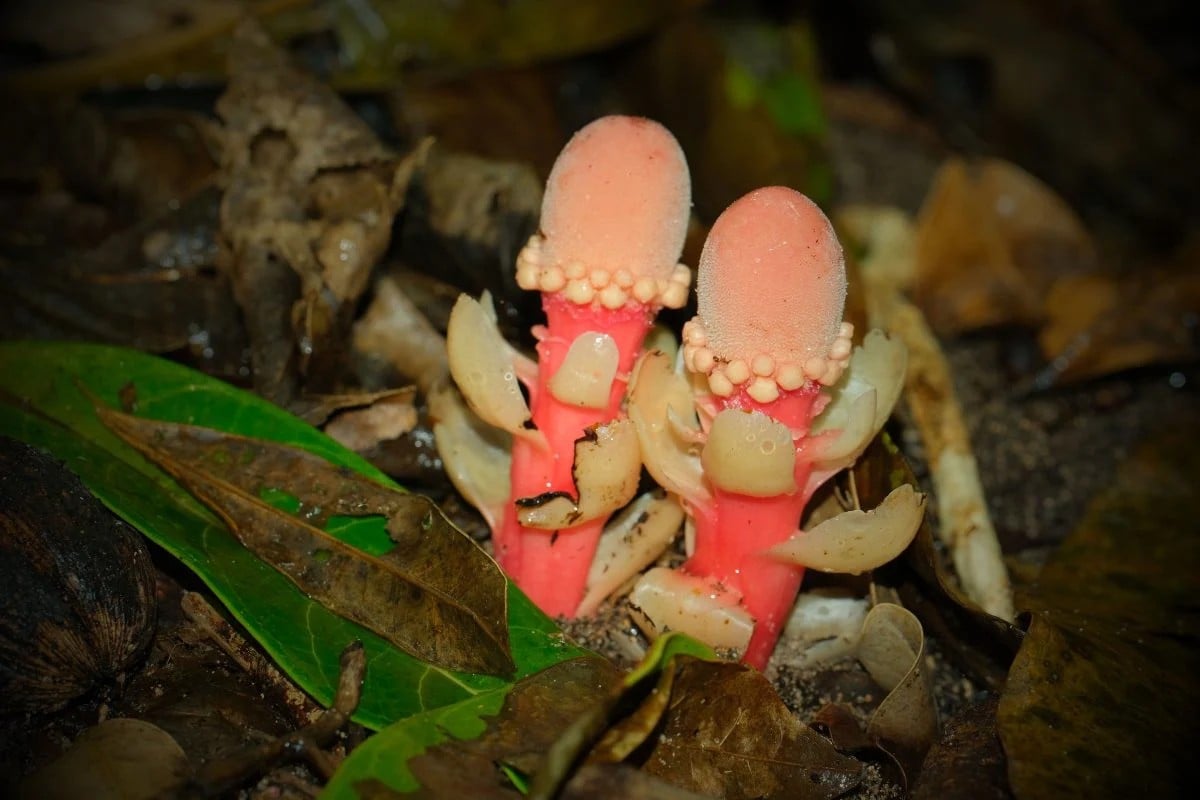
At the foot of moss-covered trees in the mountains of Taiwan and mainland Japan, as well as within the subtropical forests of Okinawa, an unusual organism emerges from the forest floor. It is often mistaken for a mushroom, yet it is actually a rare flowering plant that produces some of the smallest flowers and seeds known to science.
This plant, Balanophora, lacks chlorophyll and cannot carry out photosynthesis. It also has no true roots to draw water or nutrients from the soil. Instead, it survives by attaching itself to the roots of particular tree species and living entirely as a parasite. In some species and populations, seed production occurs without fertilization, a reproductive strategy that is exceptionally uncommon among plants.
6 -
a little philosophy to start the day:
"Ask any philosopher what scepticism is, and you will receive as many different answers as people you’ve asked. Some of them take it to be showing that we cannot have any knowledge – of, say, the external world – and some of them take it to be even more radical in showing that we cannot have any reasonable beliefs. In the interests of getting a handle on the varieties of scepticism, one can locate four different milestones of sceptical thought in the history of Western philosophy. These four milestones start with the least threatening of them, Pyrrhonian skepticism, and continue by Cartesian and Kantian scepticisms to the Wittgensteinian moment in which even our intention to act is put in question."
more here:https://aeon.co/essays/four-scepticisms-what-we-can-know-about-what-we-cant-know
3 -
I don't buy it. Not any of it.
That may or may not be scepticism.
"I could've had a Mi Querida!" Nick Bardis5 -
A recent study published in Molecular Nutrition & Food ResearchTrusted Source found that orange juice broadly affected genes involved in physiological activity related to heart health, inhibiting unwanted processes and promoting beneficial ones.
Orange juice dampened — or downregulated — hypertension (high blood pressure) genes. Hypertension can lead to stroke, heart attacks, and heart failure.
It did the same for inflammatory genes. Inflammation can lead to cardiac events by constricting and damaging blood vessels, as well as promoting the formation of dangerous plaque buildup.
At the same time, orange juice upregulated – promoted – the activity of genes responsible for metabolizing fat, helping the body process and store it more efficiently.
The study also found two body-type-dependent effects. Fat metabolism was particularly optimized by orange juice in people with overweight. People of normal weight saw a greater reduction in systemic inflammation.
https://www.medicalnewstoday.com/articles/orange-juice-could-help-support-heart-health
2 -
-
Join us on Zoom vHerf (Meeting # 2619860114 Password vHerf2020 )0
-

 4
4 -
-
The Dollar Is Facing an End to Its Dominance
Questions around the reliability of the US greenback are dulling the luster of what was the world’s currency of trade. New, global alternatives are emerging.https://www.wired.com/story/the-dollar-is-facing-an-end-to-its-dominance/
0 -
I started listening to the audio book of Dungeon Crawler Carl. It's stupid. It's fun. I'm oddly obsessed.
"Cooking isn't about struggling; It's about pleasure. It's like sǝx, with a wider variety of sauces."
At any given time the urge to sing "In The Jungle" is just a whim away... A whim away... A whim away...0 -
about DUT-60, it has an accessible internal surface area of 7,839 square meters per gram
https://www.rdworldonline.com/new-world-record-material-is-more-precious-than-diamonds/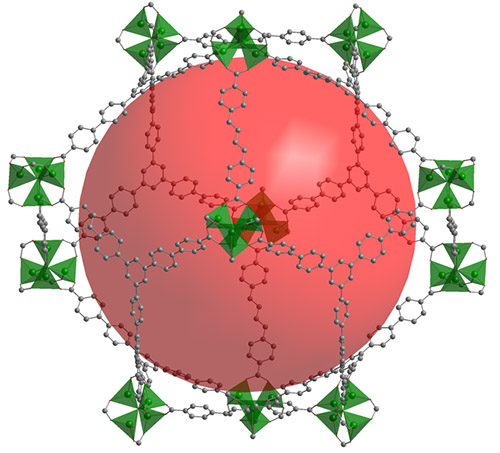
The framework of DUT-60 holds a pore volume of 5.02 cm3g-1 – the highest specific pore volume one has ever measured among all crystalline framework materials so far.2 -
"Over the past few months, President Trump has deployed an imposing military force in the Caribbean to threaten Venezuela. Until now, the president used that force — an aircraft carrier, at least seven other warships, scores of aircraft and 15,000 U.S. troops — for illegal attacks on small boats that he claimed were ferrying drugs. On Saturday, Mr. Trump dramatically escalated his campaign by capturing President Nicolás Maduro of Venezuela as part of what he called “a large scale strike” against the country.
Few people will feel any sympathy for Mr. Maduro. He is undemocratic and repressive, and has destabilized the Western Hemisphere in recent years. The United Nations recently issued a report detailing more than a decade of killings, torture, sexual violence and arbitrary detention by henchmen against his political opponents. He stole Venezuela’s presidential election in 2024. He has fueled economic and political disruption throughout the region by instigating an exodus of nearly eight million migrants.
If there is an overriding lesson of American foreign affairs in the past century, however, it is that attempting to oust even the most deplorable regime can make matters worse."
More here:
0 -
Here's what Venezuelans say:
Venezuelans around the world celebrate U.S. capture of Maduro
OAN Staff Katherine Mosack
2:22 PM – Saturday, January 3, 2026A diaspora of Venezuelans has taken to the streets to celebrate Socialist Venezuelan Nicolas Maduro’s capture at the hands of the United States.
Since early on Saturday morning, Venezuelans have come out in droves to support the Trump administration’s swift handling of Maduro, the socialist dictator who is indicted in the U.S. for narcoterrorism, as he is accused of leading the Cartel of the Suns and flooding the country with cocaine.
South Florida hosts one of the largest Venezuelan communities in the U.S. In heavily Venezuelan Doral, Florida, a city west of Miami, Venezuelans and Venezuelan Americans partied with loud music, car horns and dancing.
“Viva Venezuela libre!” one man waving a Venezuelan flag yelled as he drove by El Arepazo, a Venezuelan arepa shop, which had been busy with supporters since around 4:00 a.m.
Mariannys Milano, 45, wiped away tears as she exclaimed, “I can’t believe it. I have so many emotions. I feel like throwing up. I feel joy.”
Milano said she had hardly slept after calling and texting relatives in eastern Venezuela all night.
“The good thing is that they took out Maduro,” said Abner Márquez, 27, of Lake Worth. “Now we have to see who in the government is going to take power, and what they are going to do.”
President Donald Trump said that the U.S. would oversee Venezuela until a proper and justified transition of power can be made. Meanwhile, Maduro’s hand-picked Vice President Delcy Rodríguez has reportedly been sworn in as the interim president.
“I don’t know what’s going to happen,” said Tibisay Mejía, 51, who immigrated to the United States in 2015. “But this is the beginning.”
Jesús Naranjo, 57, left Venezuela in 1998, the same year that Maduro’s predecessor former President Hugo Chávez of the United socialist Party of Venezuela took power.
“I support his actions toward Venezuela,” said Naranjo of President Trump, who he otherwise dislikes, but he said, “had the courage to do what had to be done.”
In the Queens borough of New York City, Supporters also gathered at the Budare Café in Jackson Heights.
“Today this food is for celebrating,” said Sebastián Sánchez, 26, who had a Venezuelan flag tied around his neck like a cape as he ate a pabellón arepa and sipped black coffee. “It’s typical Venezuelan food and it’s a very special day. Living here in the United States, I am very privileged, but my family came here looking for that freedom that we didn’t have in our country, so seeing that there is a new future in Venezuela makes me very happy.”
In Santiago, the capital of Chile, chants could be heard in the streets in jubilation.
“We are free. We are all happy that the dictatorship has fallen and that we have a free country,” said Khaty Yanez, a Venezuelan woman who spent the last seven years in Chile.
Venezuelans also gathered in Peru’s capital of Lima.
“Knowing that my dad was alive to see the fall of Nicolas Maduro is very emotional. I would like to see his face,” said Venezuelan migrant Milagros Ortega, whose parents are still in Venezuela. She also said she hoped to return to the country.
“For those of us living in exile,** it is an immense joy,” said Cynthia Diaz at a small march convened in Ecuador’s capital Quito. **“Venezuelans, sooner rather than later, will return to Venezuela – to a free Venezuela, to a Venezuela that is a land of greatness.”
1 -
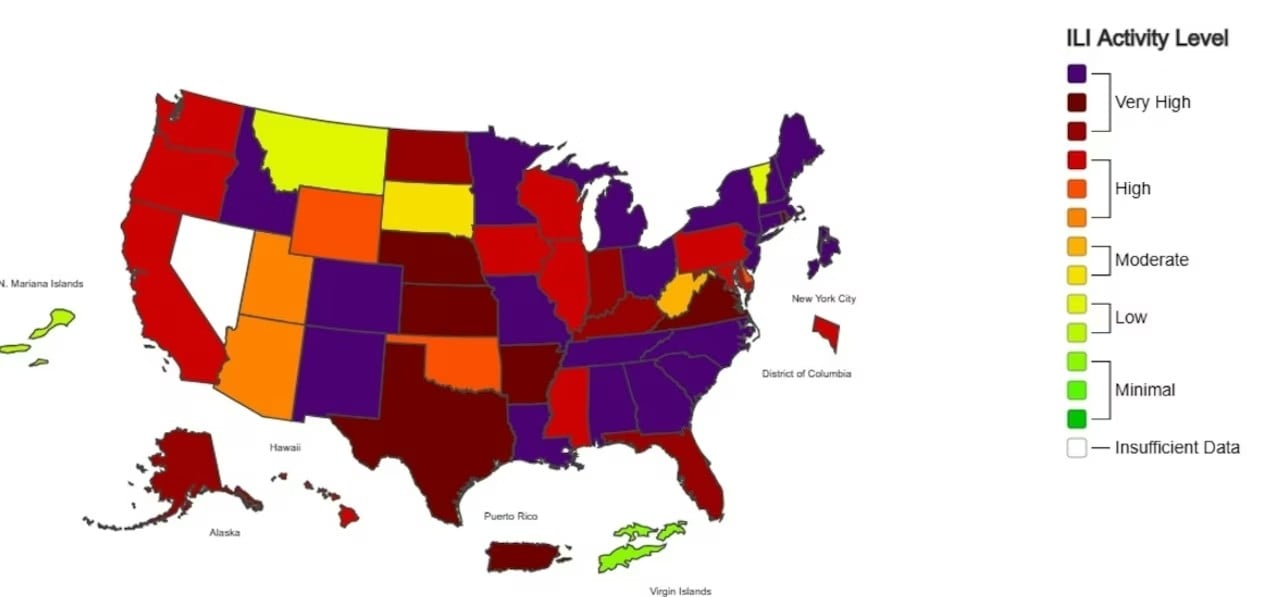
Be careful folks
 0
0 -
A Russian submarine is now escorting an oil tanker that’s been trying to avoid the US blockade of Venezuela. — WSJ
0 -
@silvermouse said:
Be careful folksGood thing Nevada is safe!
"Cooking isn't about struggling; It's about pleasure. It's like sǝx, with a wider variety of sauces."
At any given time the urge to sing "In The Jungle" is just a whim away... A whim away... A whim away...4 -
Battle Mountain by C J Box. Yes you all it's a friggin book!!!
4 -
Had some “store bought” chicken today. It sucked. Now I know why
https://www.sciencedirect.com/science/article/pii/S0032579119323612
If it don’t bother me, it don’t bother me. Just leave me alone.
2 -
A Rare Glimpse of the Dark Universe
"This cloud is a window into the dark Universe," explained team member Andrew Fox of AURA/STScI for the European Space Agency. "We know from theory that most of the mass in the Universe is expected to be dark matter, but it's difficult to detect this dark material because it doesn't emit light. Cloud-9 gives us a rare look at a dark-matter-dominated cloud."
Cloud-9 belongs to a category known as Reionization-Limited H I Clouds, or "RELHICs." The term "H I" refers to neutral hydrogen, while "RELHIC" describes a hydrogen cloud formed in the early Universe that never progressed to form stars. Scientists had predicted the existence of such objects for years, but direct confirmation remained elusive. Only after observing Cloud-9 with Hubble were researchers able to verify that it truly contains no stars.
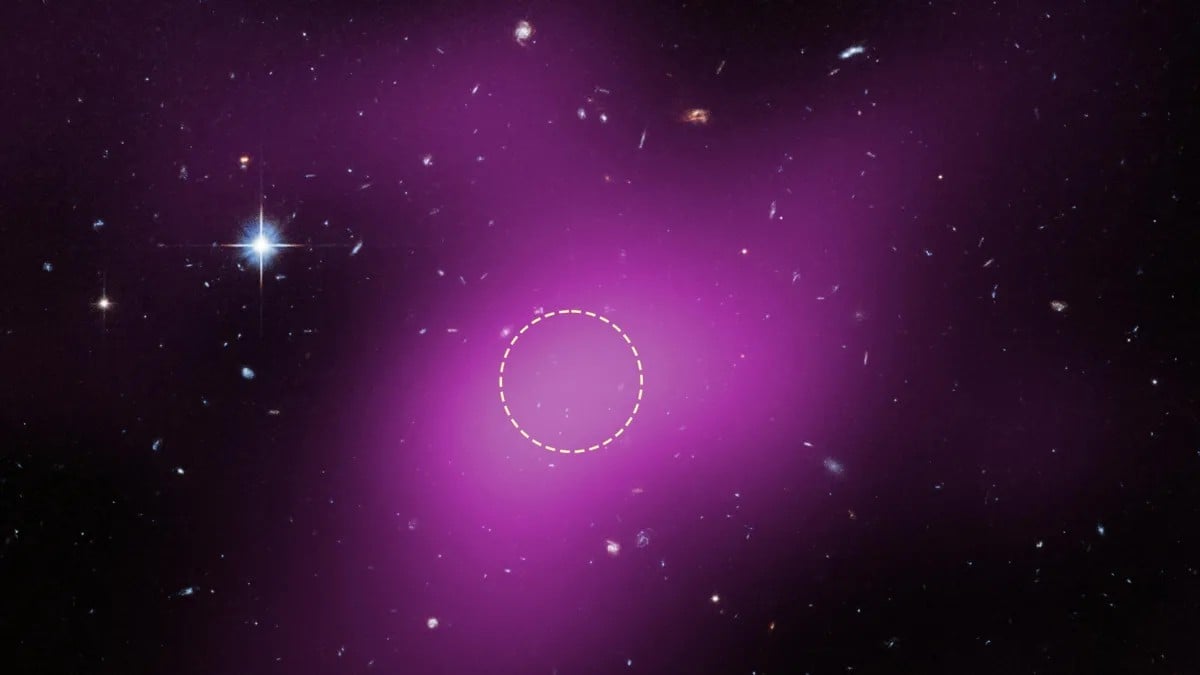
Astronomers find a ghost galaxy made of dark matter | ScienceDaily https://share.google/Y7MMeD95behspF2kf
3 -
@Rdp77 said:
Had some “store bought” chicken today. It sucked. Now I know whyhttps://www.sciencedirect.com/science/article/pii/S0032579119323612
Now check out pork.
0 -
Silicon Valley Billionaires Panic Over California’s Proposed Wealth Tax
Larry Page’s apparent Florida move highlights how seriously the ultra-rich are taking a one-time tax aimed at extreme wealth inequality.https://www.wired.com/story/backchannel-silicon-valley-billionaires-california-taxes/
1 -
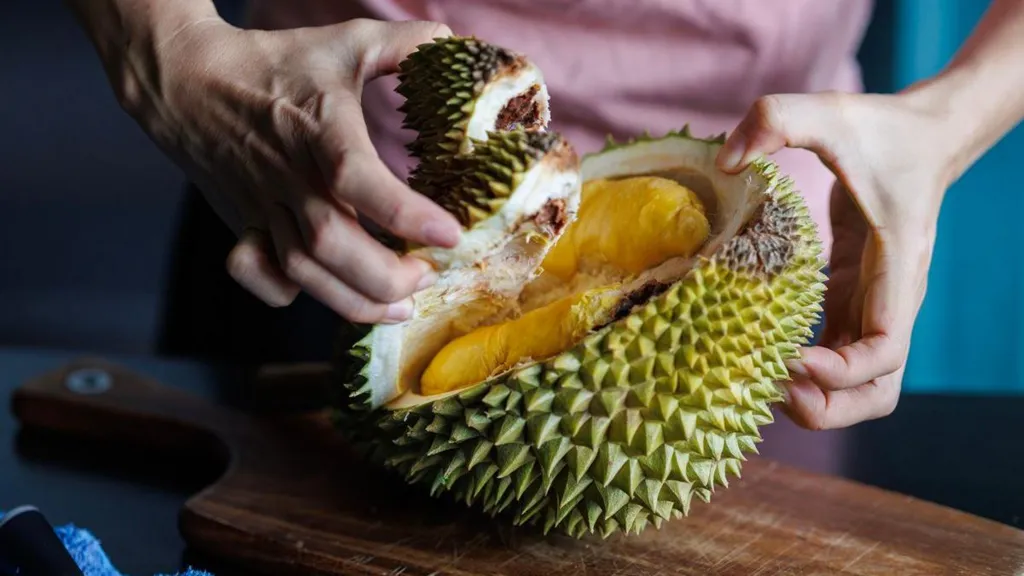
With an aroma that has been likened to cabbage, sulphur and sewers — depending on who the nose belongs to — the durian packs a pungence so divisive that it's banned on some public transport and hotels. It has been maligned for gas leaks, and was the reason a plane was grounded after passengers remonstrated against the smell wafting from the cargo hold.
 0
0 -
And tastes like what I imagine rotten fermented onions would taste like.
If it don’t bother me, it don’t bother me. Just leave me alone.
2 -
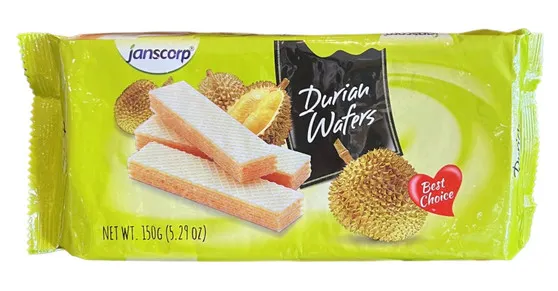
I once bought a packet of durian flavored wafers at lunch out of curiosity, example picture below. I opened the package at work and the smell was so bad that even double bagging the package in Ziploc couldn't keep me from smelling it and being nauseated. I ended up taking it downstairs and outside to the dumpster because the smell was so bad.
 Join us on Zoom vHerf (Meeting # 2619860114 Password vHerf2020 )3
 -
In '98, I was in Cambodia on a short-term missions trip to help build an addition on an orphanage (if any country needed 100x more orphanages, it was/is Cambodia - look it up sometime).
The missionary couple who ran the orphanage and arranged our visit found out I was having a birthday during our stay. They asked their cook to bake me a birthday cake... you guessed it... it was a Durian cake. Looked entirely like a normal layer cake, but none of us in the group could get a piece close to our mouths, even if we wanted to.
"I could've had a Mi Querida!" Nick Bardis7